Ladakh is often associated with high mountains, winding roads, ancient monasteries, and cold desert landscapes. But when winter begins to loosen its grip, the region reveals a softer side. Small flowers appear on apricot trees, villages become more colourful, and the landscape slowly welcomes the arrival of spring.
This seasonal change is celebrated through the Apricot Blossom Festival in Ladakh, an event that brings attention to the region’s natural beauty, local traditions, and connection with apricot cultivation. For travellers looking for something different from the usual summer road trip, this festival offers a memorable way to experience Ladakh.
When Is the Best Time to Visit the Apricot Blossom Festival?
The apricot flowering season in Ladakh generally falls between late March and mid-April. However, there is no single date that guarantees full bloom across the entire region. Temperature changes, winter snowfall, and local weather conditions influence when the flowers appear.
Some villages may begin flowering in late March, while others reach their best stage in early or mid-April. This makes checking seasonal updates an important part of planning.
If you want to photograph the orchards covered in delicate blossoms, early April can be a useful starting point for your travel plans. However, confirm the expected flowering period and festival schedule before booking your flights and accommodation.
Unlike a festival that takes place on the same dates every year, this experience depends partly on nature. Keeping your itinerary flexible can make the trip more rewarding.
What Makes the Apricot Blossom Festival Special?
The festival celebrates the arrival of spring and highlights the importance of apricot trees in local life. In several parts of Ladakh, apricots are grown for their fruit, which can be eaten fresh, dried, or processed into different food products.
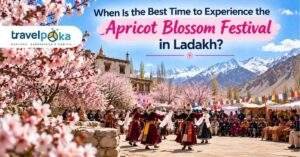
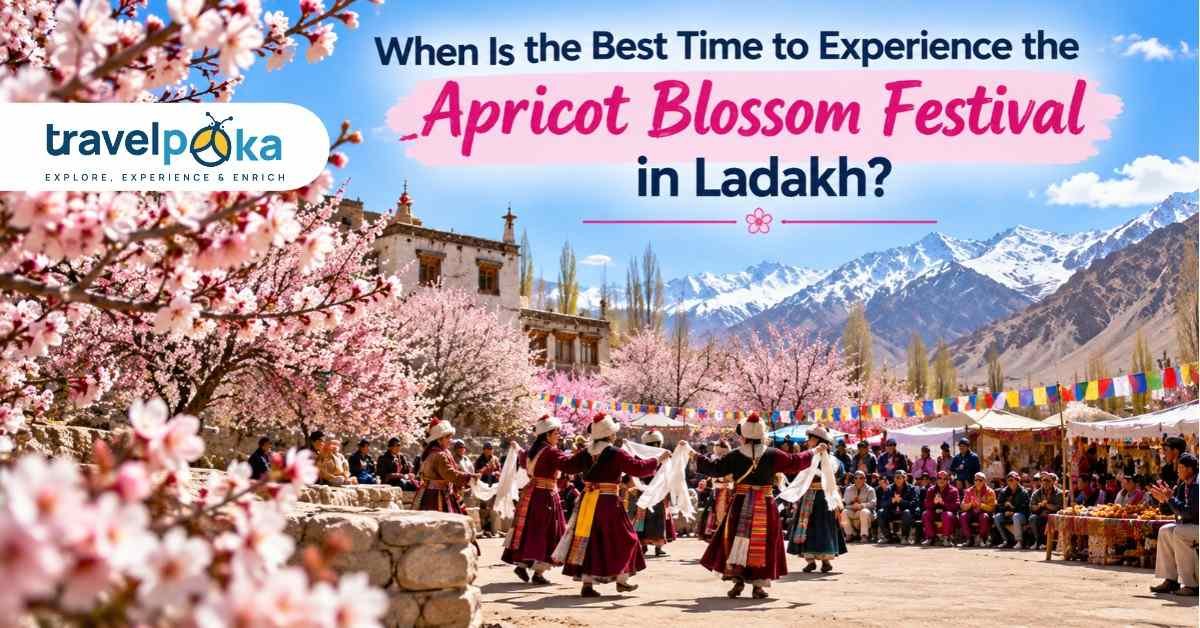
When the trees flower, ordinary village orchards become beautiful seasonal landscapes. Pale pink and white blossoms stand out against traditional houses, dry mountain slopes and distant snow-covered peaks.
The celebration also provides an opportunity to discover Ladakh’s cultural traditions. Depending on the location and programme, visitors may encounter folk performances, local food stalls, handicrafts and community activities.
What makes the experience interesting is the connection between the flowers and everyday life. Rather than simply viewing a scenic landscape, visitors can learn how local communities use their land, preserve traditional practices, and make the most of a short growing season.
Which Places Should You Explore During Blossom Season?
Several villages in the Leh and Kargil regions are associated with apricot cultivation. The best places to visit depend on the flowering conditions and the festival venues announced for that year.
Dha-Hanu and the Aryan Valley
This region is known for its distinctive cultural traditions, village settlements, and mountain scenery. Visiting during spring can offer opportunities to see orchards and experience a different side of Ladakh’s rural life.

Khaltse and nearby villages
The areas around Khaltse provide access to settlements where agriculture forms part of the local landscape. Exploring nearby villages can be a good way to combine blossom viewing with a scenic drive.
Turtuk
Situated in the Nubra region, Turtuk is known for its cultural character, traditional architecture, and beautiful surroundings. Depending on the flowering season, apricot trees can add another attraction to a visit.

Villages around Kargil
Parts of the Kargil region have a strong connection with apricot cultivation. Travellers can explore local settlements and learn about the fruit’s role in the regional economy.
Before deciding on your route, check which locations are hosting festival activities and whether the roads are suitable for travel during your dates.
What Can You Experience at the Festival?
The blossoms are the main attraction, but the festival can offer several other experiences.
- Local culture: Discover regional music, traditional performances, and community celebrations where events are organised.
- Apricot-based products: Learn about dried apricots, preserves, and other products made from locally grown fruit.
- Handicrafts: Browse local items and discover traditional skills through community stalls and demonstrations.
- Photography: Capture the contrast between flowering trees, village homes and the rugged Himalayan landscape.
- Village exploration: Walk through local settlements, observe everyday activities and experience a quieter side of Ladakh.
Festival activities vary by location and year, so check the published programme rather than assuming every attraction will be available everywhere.
What Should You Pack for a Spring Trip to Ladakh?
Spring does not mean warm weather throughout Ladakh. Temperatures can remain low, especially after sunset, and conditions can change quickly.
Carry a warm jacket, thermal layers, comfortable walking shoes, sunglasses and sunscreen. Lip balm and moisturiser can also be useful in the region’s dry climate.
Ladakh’s altitude deserves attention as well. Give yourself time to acclimatise after arriving in Leh, avoid rushing into strenuous activities, and follow medical advice if you experience symptoms of altitude sickness.
It is also sensible to arrange transportation and accommodation in advance, particularly if your trip coincides with scheduled festival celebrations.
How Can You Plan a Better Festival Trip?
Start by deciding whether your priority is seeing the blossoms, attending cultural events, or exploring the surrounding villages. Then plan your route around the locations most likely to offer the experience you want.
Allow extra time for road journeys and weather-related changes. Avoid scheduling every activity tightly, because the best flowering conditions may differ between villages.
Before departure, confirm the festival dates, local transport arrangements and current road conditions. These checks are especially important when travelling early in the season.
Conclusion
The Apricot Blossom Festival offers a refreshing way to discover Ladakh during the transition from winter to spring. With flowering orchards, traditional villages and opportunities to experience local culture, it provides a different perspective on a region usually associated with high-altitude adventures.
Late March to mid-April is generally the period to consider, but the exact timing depends on the weather and the location. Check current updates before finalising your plans, and leave room in your itinerary to explore at a comfortable pace.
For travellers who want to experience Ladakh beyond its famous mountain routes, the apricot blossom season can be a memorable reason to visit.