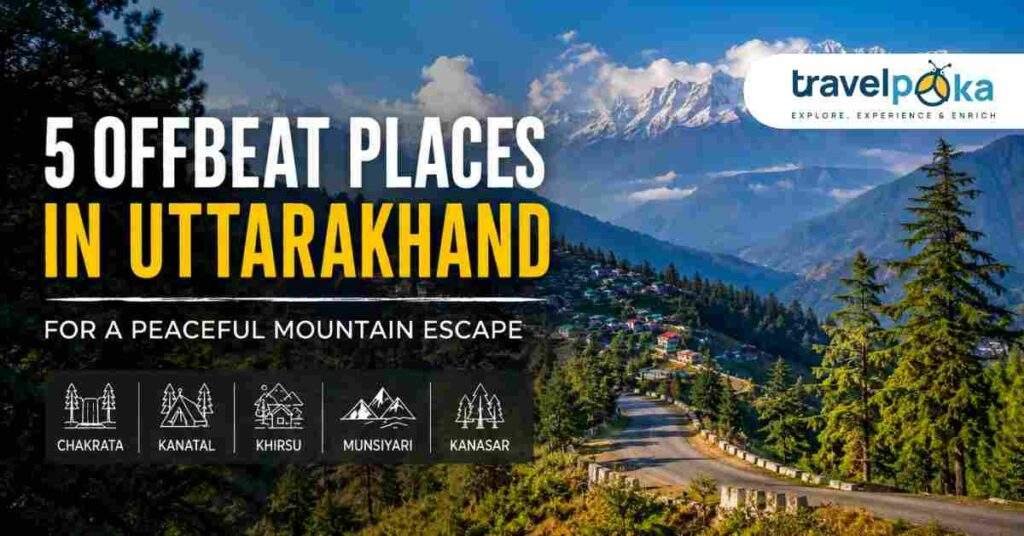
5 Offbeat Places in Uttarakhand for a Peaceful Mountain Escape
If you think you have already seen Uttarakhand because you have visited Mussoorie, Nainital, or Rishikesh, there is a good chance you have only experienced its most popular side. Uttarakhand has another personality, one that reveals itself beyond crowded markets and busy viewpoints. There are mountain roads where you can drive for kilometres without seeing a long line of tourist cars. There are quiet villages surrounded by forests, orchards overlooking distant peaks, waterfalls tucked away from the usual tourist circuit, and evenings when the loudest sound is simply the wind moving through the trees. For travellers searching for offbeat places in Uttarakhand, this lesser-explored side of the state can be far more rewarding. From the forests of Chakrata to the Panchachuli views of Munsiyari, here are five destinations to consider for your next Uttarakhand holiday. Quick answer: Some of the most rewarding offbeat destinations in Uttarakhand include Chakrata, Kanatal, Khirsu, Munsiyari and Kanasar. They are ideal for travellers seeking peaceful forests, Himalayan scenery, village experiences, trekking, camping, and a slower mountain holiday. 1. Chakrata – A Forest Escape Away from the Crowds If you want your Uttarakhand trip to begin with forests, waterfalls and mountain air, Chakrata is an excellent place to start. Situated in the Jaunsar-Bawar region, Chakrata has a very different atmosphere from Uttarakhand’s better-known hill stations. Instead of spending your day moving between crowded tourist attractions, you can take things slowly here. The landscape does most of the entertaining. Dense forests surround the roads, mountain viewpoints appear between bends, and waterfalls add another layer to the experience. One of the biggest attractions is Tiger Falls, where a forest trail leads you towards a beautiful waterfall surrounded by greenery. The higher areas around Chakrata, including Deoban, offer expansive Himalayan views when weather conditions are favourable. What to do in Chakrata Visit Tiger Falls Explore Deoban Take nature walks through the forests Visit Mahasu Devta Temple Explore nearby villages Enjoy sunrise and mountain viewpoints Best for: Nature lovers, couples, families, photographers and travellers who enjoy forest destinations. 2. Kanatal – A Quiet Weekend in the Mountains There is something wonderfully simple about Kanatal. You don’t need an ambitious sightseeing plan here. A comfortable stay, a forest walk, good food and a mountain-facing evening can be enough to make the trip worthwhile. Located in the Tehri Garhwal region, Kanatal is surrounded by forests and offers beautiful mountain scenery. It is particularly popular with travellers looking for camping in Uttarakhand, nature walks and a quieter alternative to some of the state’s busier hill destinations. A visit to Surkanda Devi Temple can be included in your trip, while the surrounding forest areas provide opportunities for walking and exploring nature. The real attraction, however, is the pace. Wake up early, step outside with a cup of tea and watch the morning light move across the mountains. By evening, settle down somewhere with a clear view of the sky. That’s Kanatal. Things to do in Kanatal Visit Surkanda Devi Temple Explore Kodia Forest Go camping Take nature walks Enjoy mountain viewpoints Spend time exploring the surrounding countryside Best for: Couples, families, weekend travellers and anyone looking for a relaxing mountain break. 3. Khirsu – Where the Mountains Slow Everything Down Some destinations are made for sightseeing. Khirsu is made for slowing down. Located near Pauri, Khirsu is a peaceful mountain destination surrounded by forests and orchards. Its charm lies in its uncomplicated landscape, green hills, quiet roads, traditional villages and wide Himalayan views. The apple orchards are one of the area’s highlights, while clear weather can reveal impressive views of snow-covered Himalayan peaks in the distance. Khirsu is particularly appealing if your idea of a holiday is not waking up at 6 AM to rush through six attractions. Instead, spend the morning walking around the village. Stop for tea. Talk to locals. Find a viewpoint. Take photographs. Come back before sunset. Sometimes, doing less is exactly what you need from a mountain holiday. Why visit Khirsu? Peaceful village atmosphere Apple orchards Himalayan views Forest surroundings Photography opportunities Slow and relaxed travel experience Best for: Couples, photographers, families and travellers who prefer peaceful destinations over busy tourist centres. 4. Munsiyari – The Himalayan Destination You Shouldn’t Rush Then there is Munsiyari. And honestly, this one deserves more than a quick stop on your itinerary. Located in Uttarakhand’s Kumaon region, Munsiyari is known for its dramatic Himalayan scenery, particularly views of the Panchachuli peaks. The journey to Munsiyari is longer than reaching many popular Uttarakhand destinations, but that distance is part of its appeal. As you move deeper into the mountains, the landscape gradually becomes quieter and more remote. Munsiyari also offers opportunities to experience local village life, Kumaoni culture and Himalayan trekking. For photographers, the changing colours of the mountains throughout the day are reason enough to stay longer. Morning light. Afternoon clouds. Golden-hour peaks. And sunsets that can completely change the mood of the landscape. Things to do in Munsiyari Admire the Panchachuli peaks Explore nearby mountain villages Experience local Kumaoni culture Take suitable trekking routes Visit nearby natural attractions Photograph Himalayan sunrise and sunset Best for: Adventure travellers, photographers, trekkers and serious mountain lovers. Travel tip: Don’t squeeze Munsiyari into a rushed itinerary. The distance from the major cities means you should allow sufficient travel time. 5. Kanasar – Get Lost in the Deodar Forests If mountains mean forests, fresh air and solitude to you, Kanasar may become one of your favourite places on this list. Located in the wider Chakrata region, Kanasar is known for its beautiful deodar forests. The enormous trees create a completely different atmosphere from the open mountain viewpoints found elsewhere in Uttarakhand. There isn’t a huge list of attractions to tick off. And that’s a good thing. Come here to walk through the forest, photograph the trees, enjoy the silence and spend time outdoors without constantly checking what’s next on Google Maps. For travellers searching for hidden gems in Uttarakhand, Kanasar offers exactly the kind of experience